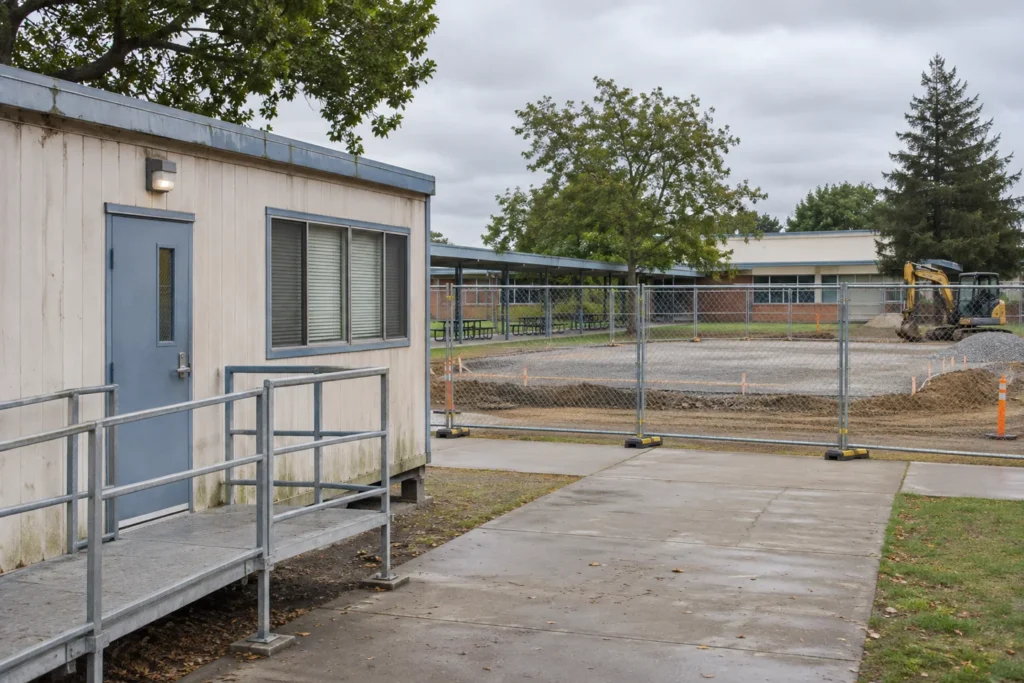
Replacing an older classroom is not only a building purchase. The school may need to remove an existing structure, keep other classrooms operating and have the new space ready before students return. Those dependencies should shape the project from the first pricing discussion.
Ask for modular classroom prices using the required teaching date and the existing site conditions. When considering replacement modular classrooms, separate the date the building arrives from the date the school can actually use it.
A modular classroom replacement should be assessed as a complete teaching facility, including the work required before it can open.
Work backward from classroom readiness
Identify the checks, inspections, connections and furniture installation needed before teaching begins. Then work backward through installation, delivery and site preparation. A delivery date by itself does not include every task that follows. Agree who maintains the full schedule and who reports changes.
Review the modular construction timeline alongside the school calendar. Holidays may offer a quieter work period, but contractors, approvals and utility coordination still need to be arranged. Do not assume an entire project can fit inside a break without a project-specific schedule.
Create a readiness list with three columns: task, responsible party and required completion date. Include the school’s own work, such as moving furniture and setting up classroom technology. This makes the handover discussion more concrete and exposes tasks that neither the building supplier nor the school has yet accepted.
Make the existing building part of the scope
Document what must happen to the old classroom and anything attached to it. Steps, ramps, covered links, utility connections and stored equipment can complicate removal. Establish which items will be retained, replaced or removed, and identify who is responsible for each task.
Ask your project team to assess existing foundations and services before assuming they can be reused. The classroom buyer’s guide helps frame the replacement decision, while the actual condition and suitability of the site need a qualified review. Existing facilities should never be treated as automatically suitable for a different building.
Compare the complete replacement project
Request a written division between building supply, removal, site work and final readiness. Include temporary teaching arrangements if the school will need them. A low building price can be misleading when another proposal includes work that the first leaves to the school.
Compare classroom replacement prices only after those responsibilities are aligned. Ask what could change the schedule and which decisions the school must make early. Keep a contingency discussion focused on practical alternatives, such as preserving access to an existing classroom until the replacement is cleared for use. A well-organized replacement gives the school a clearer route to a usable building and avoids confusing a promising delivery date with a confirmed return-to-classroom date.