Warranty coverage varies by provider, manufacturer, installer, product and scope. Buyers should identify coverage periods, exclusions, responsible parties, claim procedures and required maintenance for the factory building, field work, equipment and site improvements.
Plan the connected decisions: modular office buildings, modular classrooms & education buildings, modular medical buildings & clinics, modular retail buildings. Use the matching modular building buyer’s guides, then resolve modular building applications, buy, lease or rent, modular vs. portable buildings and compare modular companies and quotes before comparing complete project quotes.
Separate coverage by scope and party
The module manufacturer, general contractor, installer, site contractors and equipment manufacturers may provide different warranties. Create a matrix for structure, roof, exterior, interiors, doors, windows, HVAC, plumbing, electrical, controls, field connections, foundations, paving and other site work. A single proposal statement should not be assumed to cover work performed under separate contracts.
Review start dates, exclusions and remedies
Confirm when each warranty begins: factory completion, delivery, substantial completion, occupancy or another milestone. Identify length, transfer rights, response expectations, travel charges, labor, material and consequential-damage exclusions. Ask who decides whether a problem is factory, transportation, installation, site or maintenance related and how disagreements are escalated. Contract and warranty review belongs with qualified advisers.
Protect coverage through documentation
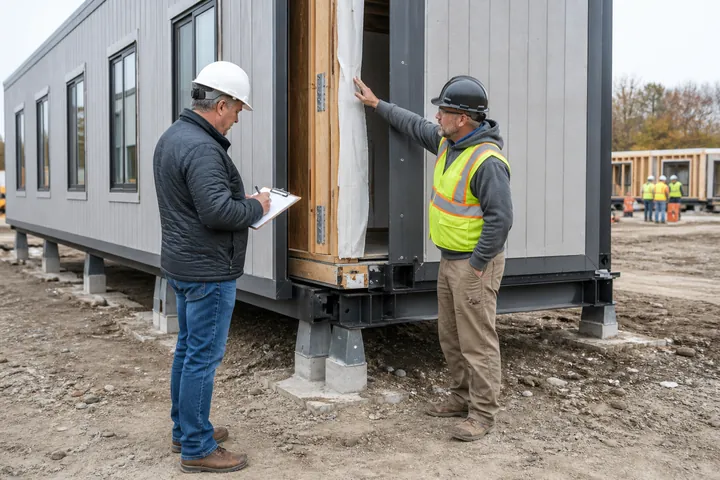
Collect approved drawings, inspection records, startup reports, balancing results, product data, serial numbers, training records, photographs and contact information at closeout. Document delivery or installation damage immediately and track correction. Follow required maintenance and retain service records. Alterations, unapproved penetrations, standing water or missed equipment service can complicate a claim even when the original concern is legitimate.
Build a practical operating plan
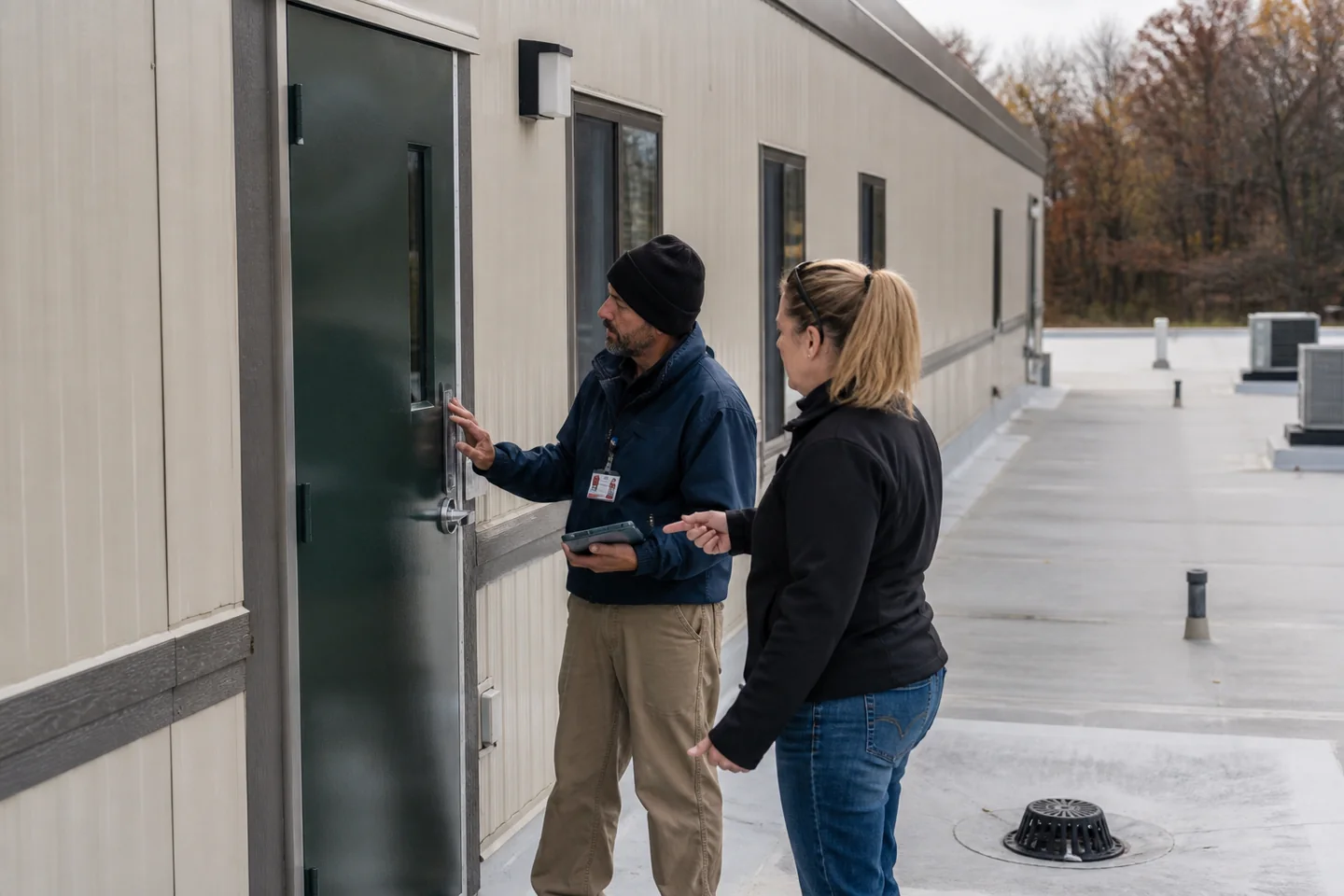
Assign routine inspection of roofing, drainage, sealants, exterior joints, doors, windows, foundations, utilities and site circulation. Schedule HVAC, fire-protection, alarm and specialty-equipment service. Train staff on shutoffs, controls and emergency procedures. Before the warranty period ends, conduct a documented review with enough time to report covered work and plan longer-term capital replacements.
How the answer changes by modular building use
Warranty and maintenance cannot be evaluated in isolation from occupancy and daily operations. The same general question produces different design, site and pricing consequences when the building supports office work, instruction, healthcare, retail activity or a technical process. Use the operating brief to test the answer against each room, user group and required system.
Modular Office Buildings
Permanent and relocatable offices for companies, agencies, project teams and expanding operations. For this use, the project team should test private offices, open work areas and meeting rooms and reception, security and visitor circulation while coordinating power and data distribution and hvac zoning and controls. Those requirements belong in the same record as the answer above; otherwise a broadly correct decision can still be wrong for the actual facility.
Modular Classrooms & Education Buildings
Instructional buildings, administrative suites and support space for schools, districts and training organizations. For this use, the project team should test classroom capacity and teaching layout and supervised entries and corridor visibility while coordinating daylighting and acoustic control and technology and instructional power. Those requirements belong in the same record as the answer above; otherwise a broadly correct decision can still be wrong for the actual facility.
Modular Medical Buildings & Clinics
Clinics, exam suites, diagnostic space and healthcare support buildings planned around privacy, utilities and operations. For this use, the project team should test patient, staff and supply circulation and privacy and acoustic separation while coordinating clinical power and low voltage and plumbing and specialty utilities. Those requirements belong in the same record as the answer above; otherwise a broadly correct decision can still be wrong for the actual facility.
Modular Retail Buildings
Stores, sales centers and customer-service buildings with adaptable layouts and commercial exterior options. For this use, the project team should test customer arrival and storefront presence and merchandising, checkout and queueing while coordinating display and point-of-sale power and lighting and controls. Those requirements belong in the same record as the answer above; otherwise a broadly correct decision can still be wrong for the actual facility.
Modular Government & Public Buildings
Administrative, public-service and agency facilities for federal, state, county and municipal users. For this use, the project team should test public and staff circulation and security screening and controlled areas while coordinating access control and surveillance and resilient power and communications. Those requirements belong in the same record as the answer above; otherwise a broadly correct decision can still be wrong for the actual facility.
Turn the answer into a documented modular project decision
Record the decision, the facts supporting it, the person responsible for confirmation and the date when it must be complete. Identify whether the item is verified, assumed, allowed for or still unresolved. Then connect it to the drawings, budget division, schedule activity and approval that depend on it. This prevents a useful planning answer from disappearing when responsibility moves among the owner, designer, manufacturer, site contractor and installer.
When proposals arrive, require every provider to respond to the same documented position on warranty and maintenance. A response should state what is included, what another party must supply, which information can change the answer and how a change affects price or time. If an item cannot yet be fixed, label the allowance and the evidence required to replace it with a firm value. Silence should not be treated as inclusion.
What a complete modular building project record should contain
| Record item | How it supports the decision |
|---|---|
| Warranty matrix by system and contractor | State the current basis, accountable party, required date and effect on building, property, pricing and occupancy. |
| Start dates and coverage periods | State the current basis, accountable party, required date and effect on building, property, pricing and occupancy. |
| Claim contacts and response process | State the current basis, accountable party, required date and effect on building, property, pricing and occupancy. |
| Closeout and maintenance records | State the current basis, accountable party, required date and effect on building, property, pricing and occupancy. |
| Pre-expiration building review | State the current basis, accountable party, required date and effect on building, property, pricing and occupancy. |
Carry this record into concept review, proposal comparison and the preconstruction handoff. Update it whenever the use, property, equipment, code path or opening target changes. The goal is not more paperwork; it is one traceable answer that the building and site teams can execute without relying on different assumptions.
BUYER CHECKLIST
Carry these modular building decisions into the next project meeting.
- Warranty matrix by system and contractor
- Start dates and coverage periods
- Claim contacts and response process
- Closeout and maintenance records
- Pre-expiration building review